Apr 9, 2026
The Best Mural Festivals in the United States Worth Traveling For
A guide to the most important mural festivals in the United States, from large-scale productions to artist-driven paint jams. Where to go, what to look for, and what actually matters once you're there if you care about murals, street art, and public art culture.
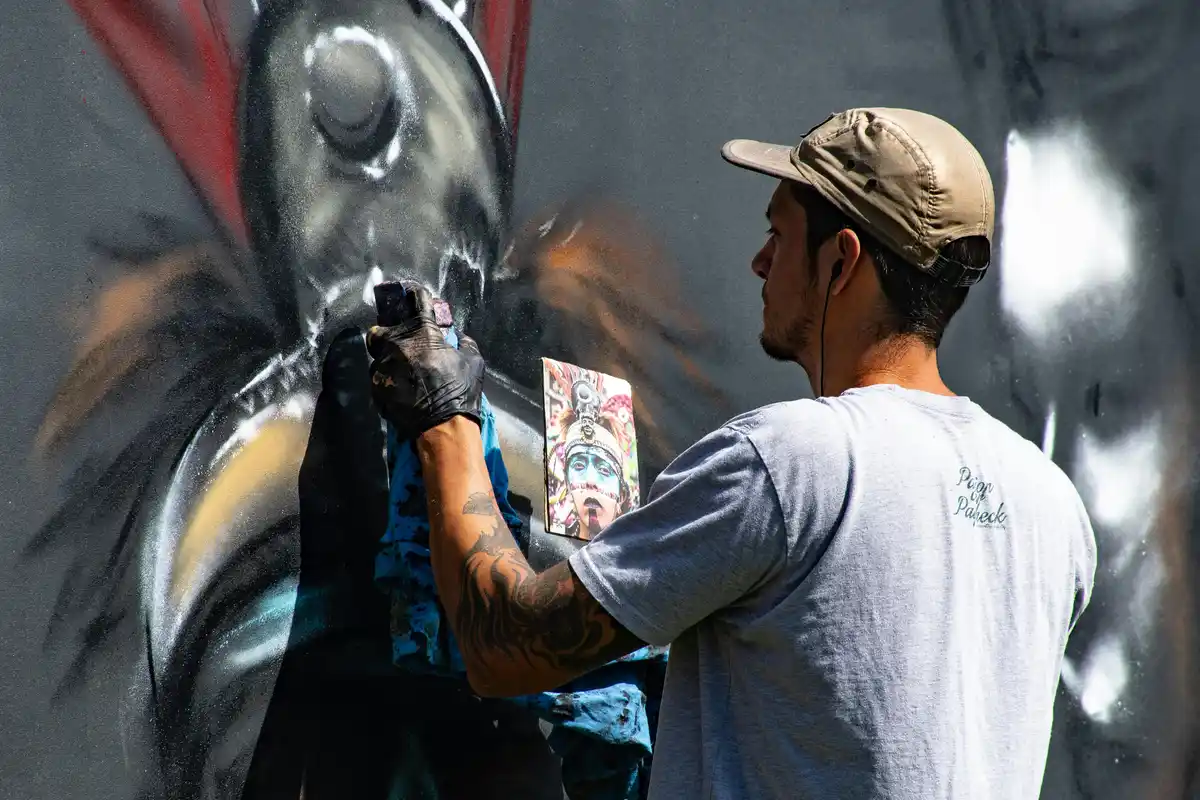
There's a moment at every mural festival that hooks you, and it's not the finished walls.
You can scroll past finished murals all day. That's not the point.
It's being there early, before the crowd builds, when the lifts are just warming up and the street still feels quiet. An artist is already halfway into the process, mapping proportions with a loose grid, stepping back, adjusting, stepping in again. There's a quick test spray on the ground to check pressure, the switch from a skinny cap to a fat cap once the lines commit. The hum of a scissor lift, the smell of fresh paint hitting raw concrete.
At that stage, most people walk right past it. It doesn't look like much yet.
But if you've spent time around mural work, you can already see where it's going.
That's the real draw. Not the finished piece, the transformation.
Over the last fifteen years, mural festivals across the United States have grown from small, artist-driven gatherings into major cultural events that reshape neighborhoods. Some are still rooted in that original energy, artists experimenting, pushing scale, working off instinct. Others have become more polished, more curated, sometimes leaning toward what photographs well instead of what holds up over time.
Both exist. Often on the same block.
If you pay attention, you start to see the difference. The walls designed for Instagram versus the ones that actually respond to the surface, the architecture, the light. The pieces rushed for a deadline versus the ones where the artist clearly spent time sitting with the space.
And then there's everything behind it.
Who owns the wall. Who's paying for the lift. Whether the artist is getting a real fee or just "exposure." What the neighborhood looked like before the murals arrived, and who can still afford to be there now.
Mural festivals create energy. They also change cities and communities.
If you care about murals, that's part of the experience too.
POW! WOW! — Honolulu, Hawaii
This is one of the few mural festivals in the U.S. that actually shifted the global street art scene.
When Jasper Wong started it in 2011, the idea was simple: bring together a mix of local and international artists, give them walls, and let people watch the work happen in real time. That format has been copied by mural festivals around the world.
Kakaʻako isn't polished. It's industrial, warehouses, loading docks, wide concrete surfaces that can handle large-scale murals. That matters. The walls aren't decorative backdrops, they're built for serious street art.
If you go, don't just hit the main walls. Walk the edges. The side streets, the back alleys, the walls that don't get the same foot traffic. That's where you'll find murals that weren't made with an audience in mind.
Also pay attention to layering. Some walls have been painted over multiple times, each year leaving fragments underneath. If you look closely, you'll see old work ghosting through newer pieces.
That's part of the history of the place.
CRUSH WALLS — Denver, Colorado
CRUSH is one of the clearest examples of how street art festivals can transform a neighborhood — and what comes with that.
Started by Robin Munro in 2010, the festival helped turn RiNo into one of the most recognizable mural districts in the U.S. Browse mural artists in Denver to see the kind of talent the city attracts.
Every September, artists cover a tight grid of streets with an almost overwhelming density of murals. You can walk a single block and see five completely different styles, hyper-realism next to abstract lettering next to experimental work that shouldn't work but does.
The scale is impressive, but what's more interesting is how the neighborhood changed around it.
Rents went up. Buildings got redeveloped. Some of the original murals are gone. Some of the artists who helped define the district aren't there anymore.
That tension is part of the experience now.
If you go, don't just look at the murals. Look at the buildings. Notice what's new, what's been replaced, what's still holding on. The contrast tells you more than any single wall.
Mural Arts Philadelphia — Philadelphia, Pennsylvania
Philadelphia operates on a completely different model from most mural festivals in the United States.
This isn't a weekend event. It's a long-term public art program that has produced thousands of murals across the city.
Originally built as an anti-graffiti initiative, it evolved into one of the most influential public art programs in the world.
What sets it apart is intent.
These murals are not just visual statements. They are tied directly to community narratives, incarceration, immigration, addiction, and neighborhood identity.
Take Steve Powers' "A Love Letter For You." You don't experience it standing still. You see it from the train, message by message, stretched across rooftops.
If you're interested in how murals function as more than decoration — how they carry memory and meaning — this is one of the most important places to see it.
BLINK — Cincinnati, Ohio
BLINK is one of the largest public art and mural festivals in the United States. You can explore mural artists in Cincinnati to see the depth of talent in the region.
At night, projection mapping takes over entire buildings, transforming downtown into a moving canvas. It's high production and designed to draw massive crowds.
But the murals are what stay.
Each festival leaves behind permanent public art across the city, and the quality is consistently strong.
What makes BLINK interesting is the contrast between temporary spectacle and lasting work.
The projections disappear. The murals remain.
If you go, walk the full route. Move beyond the main crowds. The farther out you go, the more space you'll have to actually experience the work.
Wynwood Walls — Miami, Florida
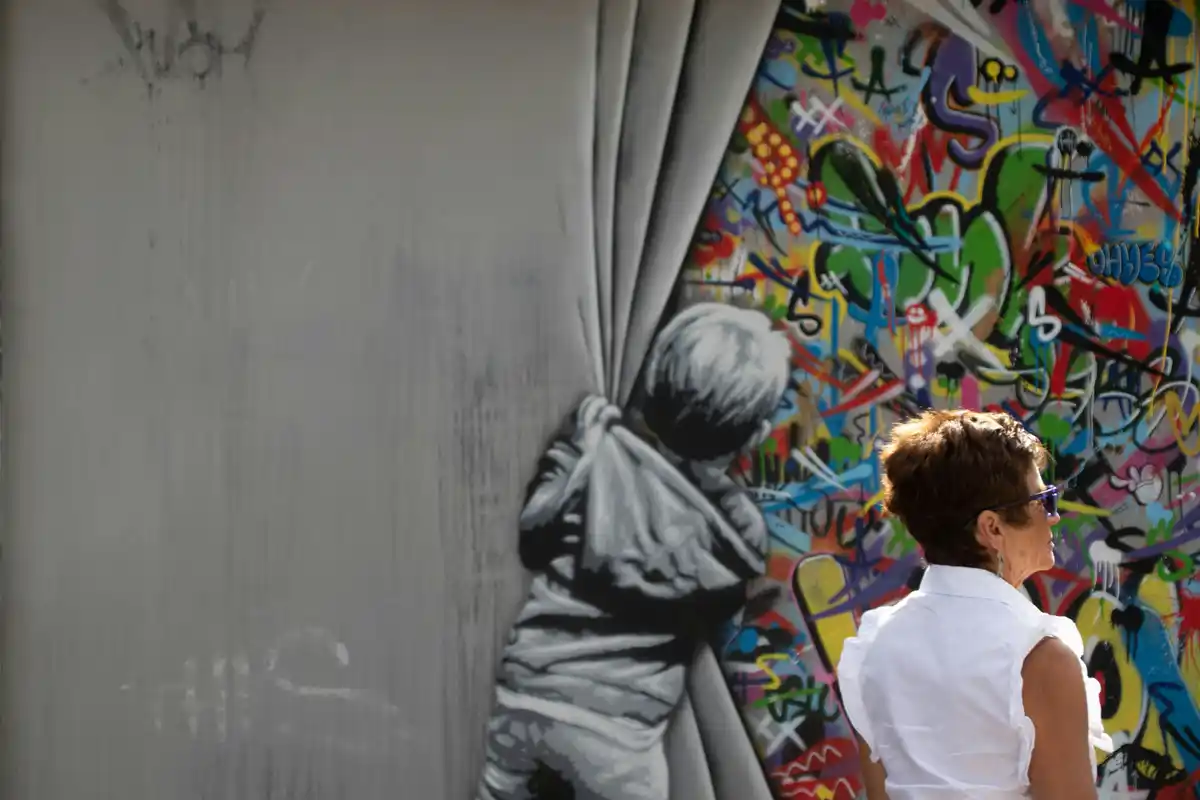
Wynwood is one of the most recognizable street art destinations in the United States, and also one of the most complex. See what the Miami mural scene looks like today.
Tony Goldman transformed a warehouse district into an open-air mural museum by bringing in some of the most well-known street artists in the world.
It worked.
The murals rotate constantly, keeping the district visually fresh. But the surrounding environment has changed dramatically.
If you want to actually experience the murals, go on a weekday. Skip peak events. Walk beyond the main walls. The best work is often a few streets out.
And take a moment to think about what existed before the murals arrived.
Wide Open Walls — Sacramento, California
This is one of the more thoughtful mural festivals in the U.S. Browse mural artists in Sacramento to see the local talent that contributes each year.
Instead of concentrating everything in one district, murals are placed across different neighborhoods.
That changes the experience.
A mural in a residential area feels different than one in a commercial zone. It connects differently to the people who live there.
You'll see a mix of established mural artists and emerging local talent, which keeps the energy grounded and avoids feeling overly curated.
Sacramento in August is hot. Artists adjust their schedules around it.
If you want to see the process, go early or later in the day.
Others Worth Knowing About
- PangeaSeed Foundation (Sea Walls) focuses on ocean conservation through large-scale murals in coastal communities.
- WALL\THERAPY (Rochester, NY) continues to build a strong, community-driven street art presence.
- Murals in the Market (Detroit, MI) blends food culture and murals in a way that feels natural to the city.
- Life is Beautiful Festival (Las Vegas, NV) merges music and public art, leaving murals behind long after the event ends.
- Beyond Walls (Lynn, MA) shows how murals can reshape perception of a city.
- Plaza Walls (Oklahoma City, OK) keeps a district active with rotating mural work throughout the year.
The Uncomfortable Conversation
Mural festivals drive real economic impact.
They bring people into neighborhoods, create opportunities for artists, and leave behind public art that attracts visitors.
They also increase property values.
Which increases rent.
Which changes who can stay.
This is part of the reality of urban mural development and street art culture in the U.S.
Some festivals are addressing it directly. Others are not.
There's also the issue of compensation. Not all mural festivals pay artists fairly. Some still rely on exposure. If you're an artist looking to build your visibility and connect with clients, getting found online can be just as important as festival participation.
If you're an artist, ask upfront.
If you're a viewer, pay attention.
Why Go
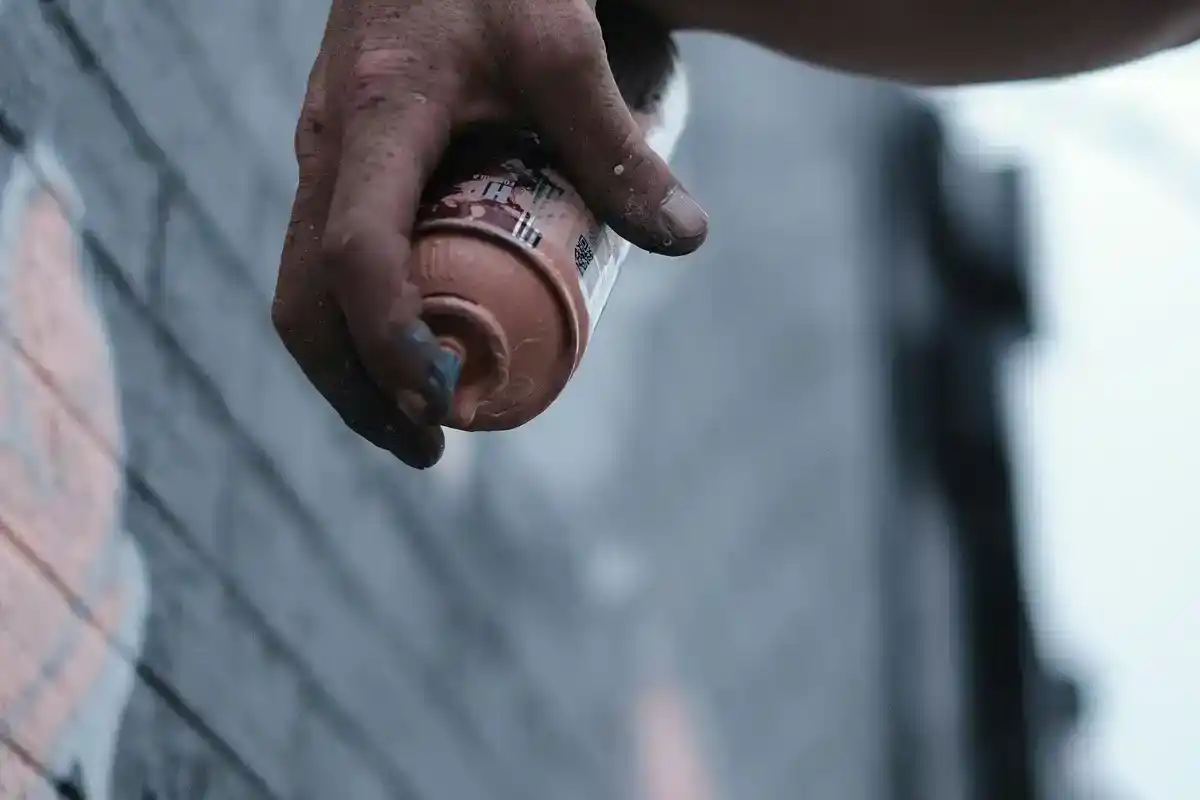
Because watching a mural come together in real time is different.
It's physical. It's public. It's happening in front of you.
A wall that looks unfinished on Thursday can be the strongest piece there by Sunday.
Talk to the artists when it makes sense. Give them space when they're working through something technical.
And go more than once.
You'll see something different every time.
If you're looking for mural artists in any of these cities, browse our directory to find talent near you.
Frequently Asked Questions
What are the biggest mural festivals in the US?
Are mural festivals free to attend?
How do mural artists get invited to festivals?
When is the best time of year for mural festivals?
Related Articles
Are you a mural artist?
Create your free listing and reach clients searching for muralists nationwide.
Add Your Listing