May 2, 2026
Graffiti vs Street Art: The Cultural Divide Behind Modern Murals
From illegal train yards and rooftop bombing to mural festivals, luxury developments, and public art commissions, the relationship between graffiti and street art remains complicated, influential, and still contested.
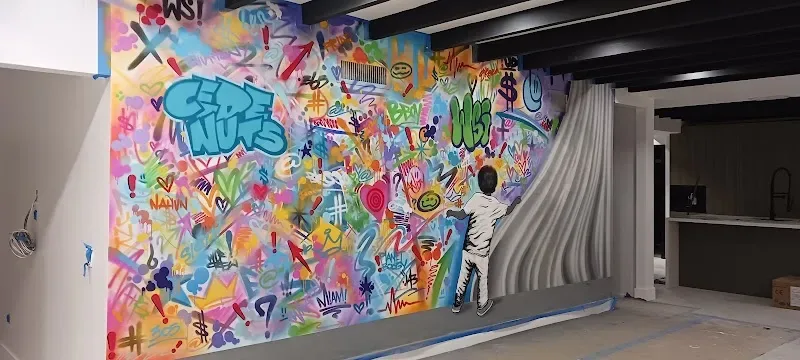
Two Worlds, One Wall
Graffiti and street art get grouped together constantly. Magazines do it. Festivals do it. Real estate listings do it. But inside the culture, a lot of artists see them as completely separate worlds with different rules, different histories, and different ideas about what even counts as legitimate work.
Graffiti came from illegal activity. Visibility, rebellion, competition, identity, the drive to leave a mark where people felt invisible. Long before galleries or corporate commissions embraced aerosol art, writers were climbing rooftops, painting trains, bombing highways, and getting arrested for it. Getting your name up in a dangerous spot earned more respect than any gallery opening ever could.
For a lot of artists, that history is not just background. It is the foundation.
Purists will tell you graffiti is a culture, not just a look. Style, risk, placement, repetition, respect earned through action. Legality is part of the definition. A clean mural commissioned by a luxury apartment complex might use spray paint and wildstyle lettering, but plenty of traditional writers would never call it graffiti.
What Is Street Art, Then?
Street art overlaps with graffiti visually, but the focus tends to land on different things: imagery, public messaging, illustration, social commentary, large-scale production. The tools expand too. Brushes, rollers, wheatpaste, stencils, projection, photography, mixed media installations.
Plenty of street artists never participated in illegal writing. They came from design backgrounds, fine art programs, or illustration careers and found their way onto walls through a completely different door.
Why the Scene Stays Divided
The split has fueled arguments for decades and shows no sign of resolving.
Some graffiti writers look at commercial street art and see sanitized rebellion. Work that borrows the visual language while stripping out the danger, the code, and the culture that built it. But the reality is messier than that. Many of the muralists getting paid commissions today came directly out of graffiti backgrounds. For a generation of aerosol artists, legal walls became one of the only realistic ways to keep painting while paying rent.
Nobody agrees on where that line should sit, and the conversation changes depending on who you ask and where they came from.
When Vandalism Becomes a Luxury Finish
Spray-painted aesthetics once treated as property damage now sell luxury apartments, restaurants, tech campuses, breweries, and high-end retail spaces. Styles born on abandoned walls and freight trains show up inside million-dollar homes and carefully curated commercial developments.
The irony is hard to miss in certain neighborhoods. Artists who helped give a block its visual identity get priced out once mural-driven redevelopment and cultural attention raise property values. A colorful mural district attracts investment, tourism, foot traffic, rising rents, and sometimes displacement. The artwork that made the area interesting becomes part of the machinery that changes who can afford to stay.
Most artists working in this space understand the dynamic. Some try to push back through community-driven projects. Others accept the trade-off. Nobody pretends it is simple.
Graffiti Walls as Production Sets
Beyond walls, the graffiti look has become one of the most requested backdrops in commercial production. Film sets, music videos, car commercials, fashion campaigns, sneaker launches, and brand activations all chase graffiti-style environments because nothing else communicates raw energy and urban credibility the same way.
Directors scout graffiti walls for music video shoots. Advertising agencies commission temporary murals as backdrops for car reveals and product launches. Sneaker brands build pop-up experiences around live painting. Television shows use graffiti-covered alleys as instant visual shorthand for grit and authenticity.
The demand extends into digital spaces. Content creators, influencers, and photographers actively hunt for graffiti walls for portraits, brand collaborations, and editorial shoots. One photogenic wall in the right neighborhood can generate thousands of tagged photos and become a destination entirely through organic sharing.
For businesses, that translates into real value. A restaurant or retail space with a striking graffiti-style mural does not just decorate a wall. It creates a set. Customers photograph themselves in front of it, tag the location, and put it in front of their networks. The mural becomes marketing that runs 24 hours a day without a media budget.
All of that demand has opened doors for aerosol artists that did not exist a generation ago. But it has also raised questions about who profits from the aesthetic, who gets credited, and whether the culture that created the style sees anything in return when corporations adopt it wholesale.
Stencils, Wheatpaste, and the DIY Branch
Stencil and wheatpaste artists sit on another branch of the tree. Influenced by political activism, punk, skate culture, and zine publishing, these artists tend to prioritize speed, repetition, and public accessibility over permanence. Wheatpaste posters can appear overnight across an entire city. Stencils let artists reproduce imagery with precision in public space faster than any freehand approach.
For some of these artists, impermanence is the point. Unlike commissioned murals built to last for years, many street interventions are temporary conversations with the city. They get painted over, weather away, get torn down, get replaced. The constant cycle of destruction and renewal is part of what gives the whole scene its pulse.
The Authenticity Question That Never Goes Away
If there is one argument that has followed graffiti and street art through every era, it is the question of authenticity.
For traditional writers, the act matters as much as the image. Style, originality, risk, placement, repetition, commitment. Painting a difficult highway spot or hitting a train line carries meaning beyond what the finished piece looks like. The danger is part of the work.
Some writers spend years painting primarily for other writers. A complicated handstyle hidden under a bridge might be unreadable to outsiders and instantly recognizable to people in the culture. Certain abandoned buildings, rail yards, tunnels, and industrial zones function like hidden galleries that only other writers know how to find.
Public recognition is not always the goal. Sometimes the respect that carries the most weight comes from a small circle of peers who understand how difficult a piece was to pull off and where it was done.
Street art took a different route. Where graffiti culture prioritized lettering, name recognition, and writer-to-writer communication, many street artists aimed to reach everybody. Imagery, accessibility, political messaging, visual storytelling meant for the general public rather than an insider audience.
Stencil work played a major role in that shift. Pre-cut templates let artists move fast, repeat across cities, and build recognizable visual identities. For graffiti purists, stenciling was controversial because it removed the spontaneity and technical challenge of fully freehand aerosol painting. To some writers, it felt like cutting corners.
But stencil work also pushed street art into mainstream visibility faster than anyone expected.
No single artist represents that crossover more than Banksy. Politically charged stencil work that landed in museums, auction houses, luxury interiors, and mainstream global culture while still looking and feeling like illegal street intervention. Pieces made anonymously on public walls sold for millions. A generation earlier, that sentence would have sounded like a joke.
The contradiction tells you everything about where the culture stands now. Styles once criminalized sit behind plexiglass. Graffiti aesthetics drive fashion lines, advertising campaigns, architecture decisions, and mural festivals worldwide. Meanwhile, many of the artists who built that visual language still work without institutional support, gallery representation, or financial safety nets.
Some keep painting illegally because that is the only version of the work they respect. Others moved into mural careers, gallery shows, design, or commercial commissions because that was the only realistic way to keep going.
Neither choice gets universal approval inside the culture. And the argument about what counts, what sells out, and what stays real is probably never going to settle. That tension is part of what keeps both graffiti and street art alive.
What All of This Left Behind
Regardless of the internal debates, both graffiti and street art have permanently reshaped what murals look like and how they function in cities.
Modern mural festivals, aerosol realism, large-scale lettering, abstract spray techniques, commercial wall art. All of it carries DNA from graffiti culture whether the connection is acknowledged or not. You can see it in soft aerosol fades, fat cap outlines, layered fills, drips, handstyles, and the instinct to paint bigger, bolder, and louder than everything around it.
Walls still hit differently when they feel like they came from the street instead of a conference room. That is not going to change.
Best for:
Breweries, music venues, streetwear stores, entertainment districts, skate spaces, urban corridors, youth-focused brands, and businesses looking for raw visual energy and cultural authenticity.
Want to understand all the different mural styles? Read our complete visual guide to every mural style. Or if you are planning a mural project, learn what a mural actually costs.
Frequently Asked Questions
What is the difference between graffiti and street art?
Is graffiti-style mural art legal?
Why do businesses commission graffiti-style murals?
How long do graffiti-style murals last outdoors?
Can graffiti murals contribute to gentrification?
How did Banksy change the relationship between graffiti and the art world?
Related Articles
Are you a mural artist?
Create your free listing and reach clients searching for muralists nationwide.
Add Your Listing